AI For Restaurants: Practical Uses For Busy Owners
The short version
- The best uses of AI in a small restaurant are the writing and planning jobs that pile up after close.
- Start with review replies and menu descriptions, since both are quick wins you can see the same week.
- AI can turn your sales notes into a prep list or a draft schedule, but a manager has to check it against real covers and staff availability.
- Keep allergen information, food safety rules, and anything legal in human hands and double-checked.
- You don’t need new software to begin. A free chat tool on your phone covers most of this.
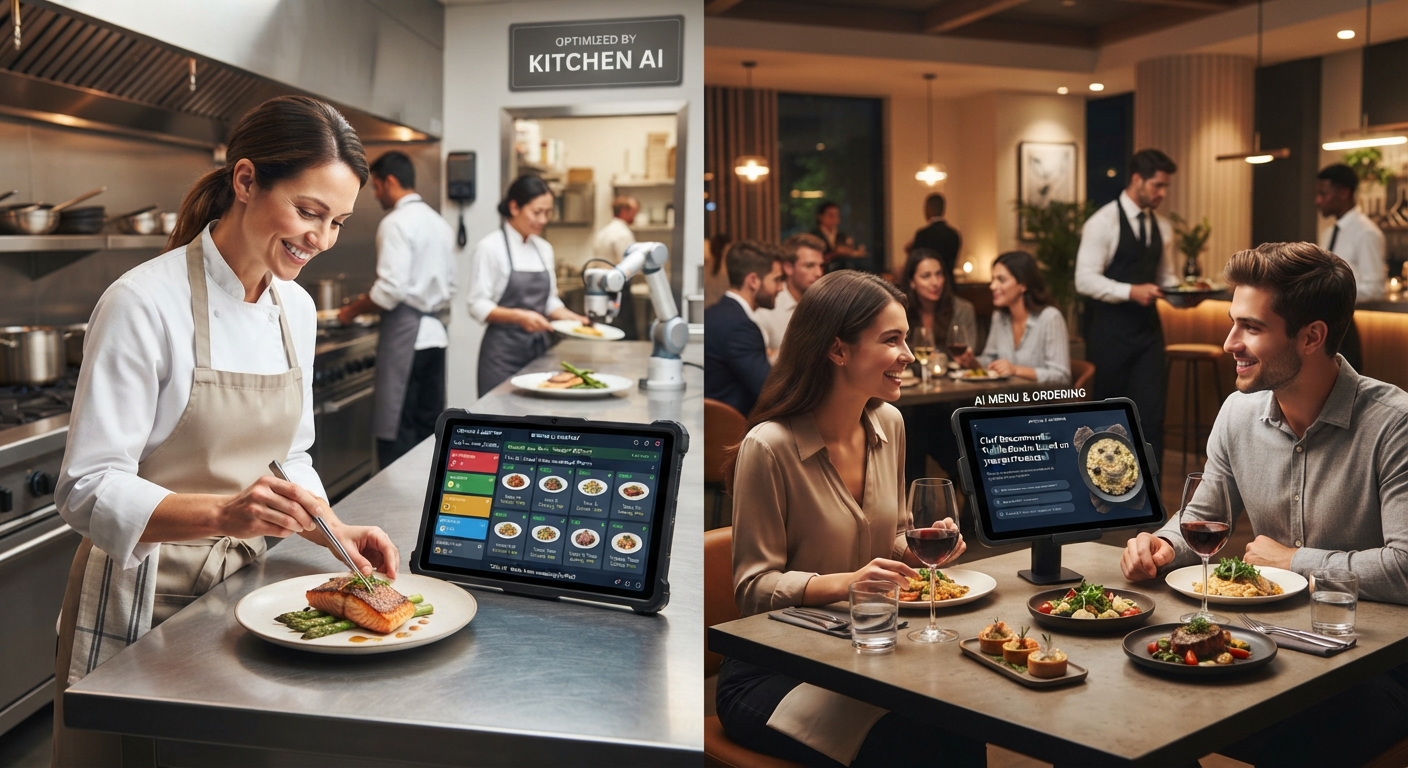
For most independent owners, AI for restaurants means a chat tool that writes the review reply you’ve been avoiding, cleans up the menu descriptions, drafts next week’s schedule, and turns one photo of the special into three social posts. These are small jobs, but they stack up after a 12-hour shift, and handing the first draft to AI gets you home earlier.
Reply to every review without dreading it
Reviews matter to a restaurant, and replying to them shows you care. It’s also draining, especially the unfair ones. AI takes the emotion out of the first draft.
“Write a reply to this 2-star review of my restaurant: [paste review]. The guest says the wait for food was 45 minutes on a Saturday. That’s true, we were short a line cook. Apologize once, don’t make excuses, mention that we’ve added a cook on weekends, and invite them back. Under 80 words, warm and direct, signed by the owner.”
For five-star reviews, ask for short replies that mention a specific dish the guest named. Repeating the same “Thanks for coming in!” to every review looks automated, which is ironic if you’re using AI to avoid exactly that. For harsh complaints that arrive by email, our guide to answering an angry customer email walks through a calm process.
Menu descriptions that sell the dish
Many menus either say too little (“Chicken sandwich, fries”) or too much. AI is good at the middle ground. Give it the real details and your voice:
“Write menu descriptions for these 6 dishes for a casual family seafood restaurant on the coast. Each under 20 words. Mention the main ingredients and one detail that makes it ours. Avoid words like ‘delectable’ and ‘mouthwatering’. Dishes: [list each dish with ingredients and anything special, like ‘grouper caught locally’ or ‘mom’s slaw recipe’].”
Read every line for accuracy. If the AI adds an ingredient that isn’t in the dish, fix it, because that’s exactly the kind of mistake that matters for guests with allergies.
Using AI for restaurants’ back-of-house planning
Planning is where AI can save managers real time, as long as you feed it real numbers.
Prep lists
Give it last week’s covers by day and your par levels, and ask for a prep list for the coming week. For example: “We did 110 covers Friday and 140 Saturday. Our par for fish tacos is 40 portions per 100 covers. Build a prep list for Friday and Saturday for these 8 items.” Check the math yourself or ask it to show the formula so you can drop it into a spreadsheet. Our guide to AI for Excel formulas shows how.
Staff schedules
Paste in staff availability, the hours you need covered, and any rules like “no one works more than 5 shifts” or “always two servers on Friday dinner”. Ask for a draft schedule in a table. It won’t be perfect. It’ll be a better starting point than a blank grid, and you’ll fix the conflicts in minutes.
Training material
New hires need the same explanations every time. Talk through your opening checklist, closing duties, or how to handle a comped meal, and ask AI to turn it into a one-page guide. You can also ask for a 10-question quiz based on it.
Social media and marketing without a marketing person
Most small restaurants post in bursts, then go quiet for a month. AI makes steady posting easier.
- Photograph the special, describe it in one line, and ask for three captions: one short, one with a story, and one with a question.
- Draft a monthly email to your list with the new dishes, events, and hours.
- Write event descriptions for trivia night, live music, or a wine dinner.
- Plan a month of posts around holidays and local events in your town.
Keep your voice in it. Paste in two or three posts you’ve written that sound like you and ask the AI to match that style.
Private event and catering inquiries are another easy win. Write one clear reply template with your minimums, deposit terms, and three sample menus, then ask AI to adapt it to each inquiry. A request for a 30-person rehearsal dinner on a Thursday gets a personal answer in two minutes instead of sitting in your inbox until Monday.
Where AI for restaurants needs a hard line
Some things should never rest on an AI draft without a careful human check:
- Allergen and dietary information on menus and in answers to guests.
- Food safety procedures, temperatures, and cleaning schedules. Follow your health department’s rules.
- Employment contracts, tip policies, and anything touching labor law. Get a professional to review.
- Liquor licensing and local permit questions.
Use AI to organize and draft this material, then check it against the real source every time.
A simple first week
Don’t try everything at once. Pick two or three:
- Monday: reply to every review from the last month.
- Tuesday: rewrite six menu descriptions.
- Thursday: draft next week’s schedule from availability.
- Saturday: post the special with an AI caption.
By Sunday you’ll know which jobs are worth handing off in your place and which you’d rather keep doing yourself.
Get Hours Back From The Office Side Of Your Restaurant
AI For Restaurant And Hospitality Owners covers reviews, menus, scheduling, prep planning, staff training, and marketing, with a worked example from a small independent restaurant and a prompt pack you can use between services.