
What Is AI In Simple Language? A Plain Definition
The short version
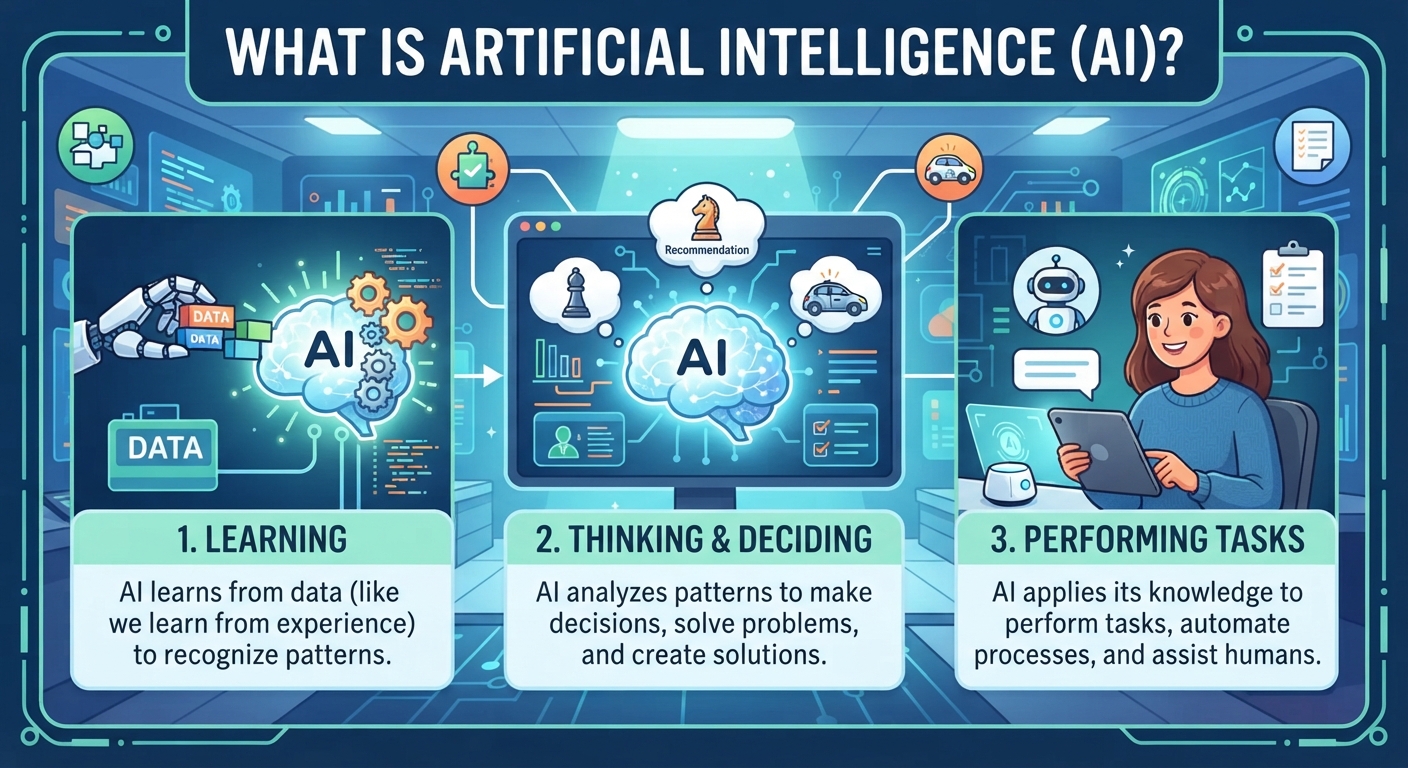
- AI is software that learns patterns from lots of examples, then uses those patterns to make a guess about something new.
- You already use it many times a day: spam filters, map traffic times, autocorrect, and the shows your streaming app suggests.
- Chat tools like ChatGPT, Claude, and Gemini are one newer kind of AI that learned patterns in language, so they can write and answer questions.
- AI makes guesses, which is why it’s often useful and sometimes wrong.
What is AI in simple language? It’s software that learns from examples instead of following only hand-written rules. Show it millions of emails marked “spam” or “not spam” and it learns what spam tends to look like, so it can sort a new email it has never seen. That’s the whole core idea. Everything else is a variation on it, applied to pictures, sounds, numbers, or words.
The difference between normal software and AI
The easiest way to answer what is AI in simple language is to compare it with the software you grew up with. Normal software follows exact instructions a programmer wrote. A calculator app adds 2 and 2 because someone wrote the rule for adding. It will never surprise you.
AI works differently. Nobody writes a rule for every possible spam email or every photo of a dog. There are too many. Instead, the software is shown a huge number of examples and adjusts itself until it gets good at telling them apart. After that training, it can handle new cases it hasn’t seen before.
A useful comparison is how a child learns what a dog is. You don’t give them a checklist of fur length and ear shapes. They see dozens of dogs, and eventually they can point at a breed they’ve never met and say “dog”. AI learns in a loosely similar way, just with far more examples and no real understanding of what a dog is.
AI you already use every day
Most people use AI dozens of times a day without calling it that. Here are common examples:
- Email spam filters. They learned from huge piles of junk mail what to move out of your inbox.
- Map apps. Arrival times and traffic warnings come from patterns in how traffic usually moves at that hour, plus live data from other phones.
- Phone keyboards. Autocorrect and the next-word suggestions above your keyboard are guesses based on patterns in text.
- Streaming and shopping suggestions. “Because you watched” rows and “customers also bought” lists come from patterns in what similar people chose.
- Photo apps. Searching your phone’s photos for “beach” or a friend’s face works because the app learned what those look like.
- Bank fraud alerts. A text asking if you just spent money in another state comes from a system that learned your normal spending pattern.
None of these feel like science fiction, and that’s the point. AI has been quietly helping with ordinary tasks for years.
So what are ChatGPT and other chat tools?
Chat tools are the kind of AI most people mean when they say “AI” today. They learned patterns from an enormous amount of written text. From those patterns, they got very good at predicting which words should come next in a sentence.
That sounds simple, but it lets them do a lot. They can write an email, summarize a report, explain a hard idea, answer questions, and hold a conversation. When you type a question, the tool builds an answer one piece at a time, each piece a likely next step based on what it learned.
Try a simple test to see this for yourself. Open any free chat tool and type:
“Explain what a mortgage is to someone who has never owned a home. Use a short example with a $250,000 house and keep it under 100 words.”
You’ll get a clear answer in seconds. Then ask a follow-up, like “What happens if I pay extra each month?” It remembers the conversation and builds on it. If you want to try this properly, our ChatGPT guide for beginners walks you through your first session.
Why AI gets things wrong
Because AI works by learning patterns and making guesses, it can guess wrong. Your spam filter sometimes hides a real email. Your map app sometimes sends you into a traffic jam. Chat tools sometimes state false facts in a confident voice, which is the version that causes the most trouble.
The plain rule: treat AI output as a smart guess. For small things, the guess is usually good enough. For anything that matters, like numbers in a report, a medical question, or a legal detail, check it against a reliable source or a professional. Our guide on how to spot AI mistakes shows you what to watch for.
What is AI in simple language, in one sentence?
If someone asks you, here’s an answer you can give: AI is software that learns patterns from lots of examples and uses them to make useful guesses, like which email is spam, which road is faster, or which words best answer your question.
That definition covers the spam filter and the chatbot alike. It also explains both why AI is helpful and why it needs checking. You don’t need to know how the math works any more than you need to know how an engine works to drive a car.
The next step is to use a chat tool for something real this week. Ask it to rewrite an email, plan a grocery list for a family of four on a set budget, or explain a letter you don’t understand. Seeing it handle your own tasks, and catching the odd mistake, will teach you more than any definition.
Understand AI And Start Using It Well
The Core Four Bundle starts from zero: what AI is, how to put it to work in everyday tasks, how to use it for research and decisions, and how to write prompts that get good answers. Four plain-English books with worked examples, prompt packs, and cheat sheets.