What Is An AI Skill? Examples And How To Show It
The short version
- An AI skill is the ability to get a reliable, checked result from an AI tool on a real task, repeatedly.
- It’s a work skill like writing or spreadsheets. It shows up as time saved, better drafts, and fewer errors.
- On a resume, name the task, the tool type, and the result, like “Cut weekly report prep from 3 hours to 45 minutes using AI summaries.”
- In a performance review, bring one before-and-after example and one process you shared with your team.
What is an AI skill? It’s the ability to use an AI tool to get a useful, accurate result on a real piece of work, and to do it again next week without luck. The skill lives in the doing: handing the tool a messy task, steering it, and checking what comes back.
Employers are starting to list AI skills in job posts and reviews, often without saying what they mean. This post gives you a plain definition, examples from common jobs, and the words to use on a resume or in a review.
What is an AI skill, broken into parts
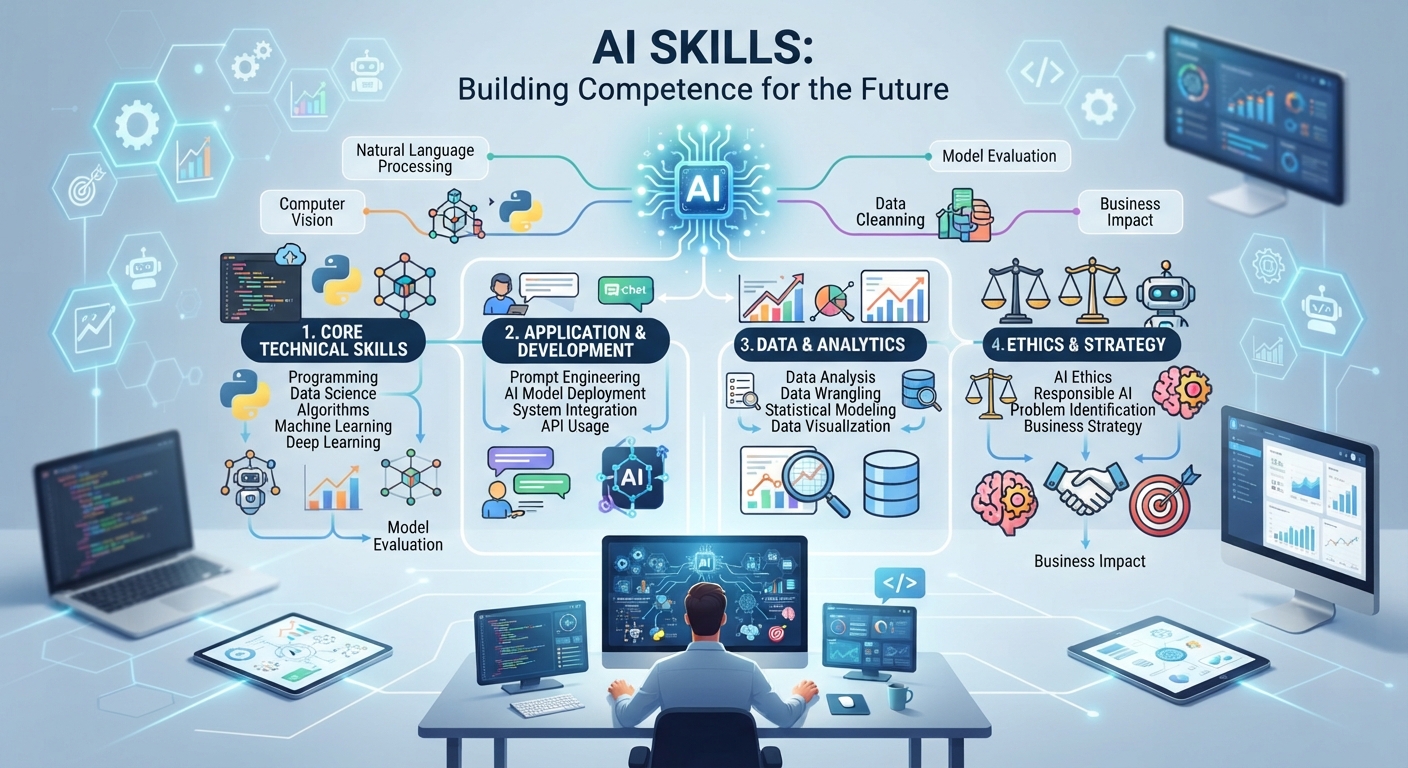
Most AI skills are made of the same few abilities. You can think of them as the pieces you practice:
- Framing the task. Turning “I need to deal with this” into a clear request with a goal, an audience, and a format.
- Giving context. Supplying the right files, notes, or examples so the tool isn’t guessing.
- Steering. Asking for specific changes when the first answer misses, instead of starting over.
- Checking. Catching wrong facts, bad math, made-up quotes, and tone problems before anything goes out.
- Knowing the limits. Deciding which tasks to hand off, which to keep, and what data should never go in.
Someone with a strong AI skill does all five without much thought. Someone who’s new usually skips steps two and four, which is why their results feel random.
One side note: some AI tools use the word “skill” for a saved set of instructions or files the assistant can load for a specific job. That’s a feature of the tool. This post is about your skill as the person using it.
Examples of AI skills at work
AI skills look different in each job. Here are concrete ones, written the way you might describe them:
Office and admin
- Turning a 45-minute meeting recording into a one-page summary with decisions and owners, sent within the hour.
- Drafting standard operating procedures from a screen recording and a few notes. The guide to writing SOPs with AI shows how.
Sales and customer service
- Writing first drafts of replies to common support tickets, then editing for accuracy and tone.
- Researching a prospect’s business before a call and preparing five tailored questions.
- Calming an angry customer email by drafting a reply that owns the problem and offers a clear fix.
Finance and operations
- Getting AI to write spreadsheet formulas, then testing them on a small sample before trusting them.
- Summarizing a 30-page vendor contract into key dates, costs, and renewal terms for a manager to review.
Marketing and content
- Turning one webinar into a blog post, five social posts, and an email.
- Building a custom assistant with brand rules so the whole team writes in the same voice. See how to build a custom GPT for the setup.
- Testing 10 subject lines before picking three to send.
- Checking drafts for claims the company can’t back up.
Notice that each example names a task and a result. That’s the key to describing the skill well.
How to show an AI skill on a resume
“Proficient in ChatGPT” tells a hiring manager very little. It’s like listing “Microsoft Word.” Show what you did with it instead. Use this pattern:
“[Action verb] [task] using [type of AI tool], [result with a number].”
Examples:
- “Cut weekly sales report prep from 3 hours to 45 minutes by using AI to summarize CRM notes and draft commentary.”
- “Built an AI assistant with our return policy and product specs, reducing first-reply time on support tickets from 1 day to 2 hours.”
- “Created a shared library of 25 tested prompts for the marketing team and trained 6 coworkers to use it.”
Use real numbers from your own work. If you didn’t measure it, estimate carefully and be ready to explain how. In a skills section, list AI next to the tasks you use it for, like “AI-assisted research and drafting,” instead of a list of app names that will change.
You can also ask AI to help you find the numbers:
“Here’s a description of how I used to do [task] and how I do it now with AI: [paste]. Help me estimate the time saved per week and write one resume bullet. Don’t exaggerate.”
How to bring it up in a performance review
Reviews reward impact, so bring evidence. Prepare two things:
- One before-and-after example. Show the old way, the new way, and what changed: hours saved, errors avoided, faster turnaround.
- One thing you shared. A prompt template, a checklist, or a short how-to you gave your team. It shows you help the whole group work better.
Also mention how you check AI work. Managers worry about errors and data leaks. Saying “I check every figure against the source and never paste client data into public tools” answers that worry before it’s asked. For a wider look at safe uses, see the guide on how to use AI at work.
How to build the skill if you’re starting out
Pick one task you do every week. Use AI on it every time for a month. Keep the prompt that works best, note the time you save, and fix what goes wrong. By the end, you’ll have a real answer when someone asks you what is an AI skill, plus a result you can put on paper.
Build AI Skills For Your Job
The Guide Library includes 30 specialized guides on specific skills, professions, and the top AI tools. Pick the ones that match your work, and use the worked examples and prompt packs to build skills you can point to in your next review.